Small businesses often depend on customers from nearby areas. A person may need a service, product, appointment, or place to visit and search Google before deciding where to go. If your business does not appear when these searches happen, potential customers may discover a competitor instead.
This is where Local SEO services can help. Local SEO focuses on improving how a business appears when people search for relevant products or services in their area. It connects your website, Google Business Profile, reviews, local search information, and content so potential customers can find useful information before making a decision.
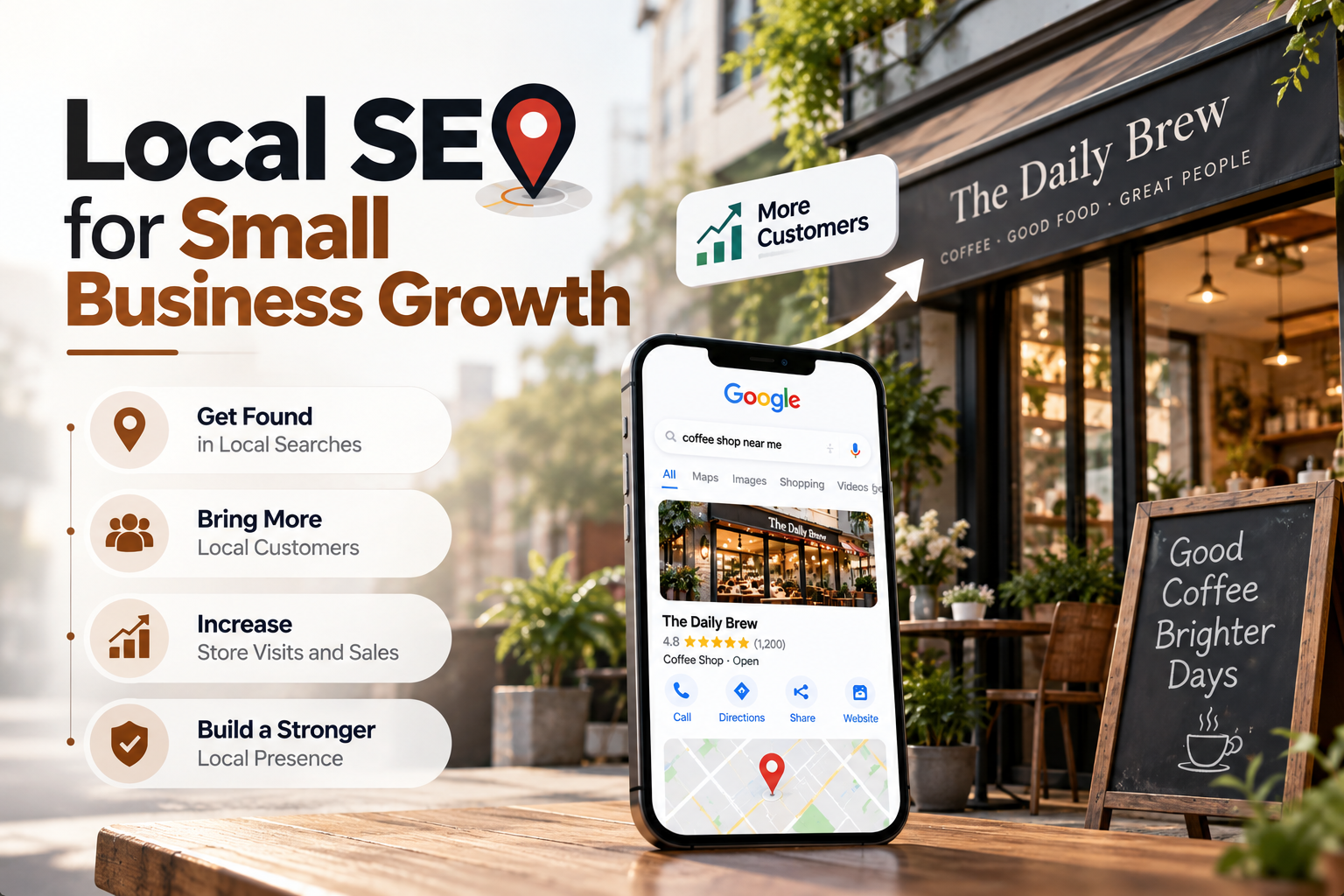
For small businesses with limited marketing resources, this is particularly useful because Local SEO focuses on reaching people whose searches already show an interest in a particular service or product.
Reach People Who Are Already Searching
One of the main advantages of Local SEO is search intent.
Someone who searches for a nearby service is usually looking for a solution to a current need. They may want to call a business, compare options, check reviews, get directions, or make an appointment.
This is different from advertising to a broad audience where many people may have no immediate interest in the service.
Local SEO helps make the business easier to discover during these high-intent searches.
The goal is not simply to reach more people. It is to improve visibility among people who are more likely to need what the business offers.
Help Customers Discover Your Business on Google Maps
Google Maps is an important discovery channel for many local businesses.
People use Maps to search for nearby options, compare ratings, check opening hours, get directions, and view photos.
A properly maintained Google Business Profile gives potential customers the information they need to evaluate a business.
Local SEO services can help review important profile details such as categories, services, hours, contact information, website links, photos, and other relevant information.
Accurate information makes it easier for customers to understand the business and decide whether it meets their needs.
Connect Searchers With the Right Services
A small business may provide several services, but potential customers will not always search for the business by name.
They are more likely to search for the particular service they need.
This is why service-focused website content is important.
Each important service should be explained clearly so visitors understand what is offered, who it is suitable for, and how they can take the next step.
Local SEO can help connect these pages with relevant search terms.
Instead of creating pages only for search engines, the goal should be to create useful pages that answer the questions real customers have.
Build Confidence Before the Customer Contacts You
Finding a business on Google does not mean someone will immediately call.
Most people want to know more first.
They may look at reviews, photos, website information, services, opening hours, and other details before making a decision.
Local SEO helps businesses improve these different points of contact.
When important information is complete and consistent, potential customers can evaluate the business more easily.
This reduces uncertainty and makes it simpler for someone to move from searching to contacting the business.
Use Reviews to Support Customer Decisions
Reviews can strongly influence how potential customers compare local businesses.
People often want to know what previous customers experienced before choosing a service.
Small businesses should therefore treat reviews as an ongoing part of their online presence.
Encouraging genuine customers to share feedback can gradually build a more useful review profile.
Responding to reviews also matters. A helpful response shows that customer feedback is being acknowledged.
Negative feedback should not automatically be ignored. A calm and professional response can show potential customers how the business handles concerns.
Create Content Around Real Customer Questions
Small businesses often receive the same questions repeatedly.
Customers may ask about the process, available services, preparation, pricing factors, timelines, or what they should expect.
These questions can become useful website content.
For example, a detailed service page or helpful article can answer common questions before the customer makes contact.
This has two benefits.
It gives search engines more useful information about the business, and it helps potential customers make better-informed decisions.
Good Local SEO content should therefore be based on genuine customer needs rather than simply adding keywords to pages.
Make Your Website Helpful for Mobile Visitors
Many local searches happen when people need information quickly.
Someone may be searching while travelling, during a lunch break, or shortly before visiting a business.
A difficult mobile website can cause that person to leave.
Important information should be easy to find on a smaller screen.
Customers should be able to understand the service, find contact information, get directions, or complete an enquiry without unnecessary steps.
Local SEO and website experience work together. Bringing someone to a website has limited value if the website makes it difficult for that person to take action.
Turn Local Visibility Into Calls and Enquiries
Rankings are useful, but they are not the final goal for most small businesses.
A business usually wants Local SEO to contribute to real customer activity.
This may include phone calls, website enquiries, appointment requests, direction requests, bookings, or store visits.
That is why Local SEO performance should be considered beyond keyword positions alone.
Businesses should understand whether improved visibility is helping more potential customers discover and interact with them.
This creates a stronger connection between SEO activity and actual business goals.
Reach Customers at Different Stages
Not every local searcher is ready to contact a business immediately.
Some people are comparing options.
Others are researching a problem before deciding which service they need.
A useful Local SEO strategy should support both types of visitors.
Service pages can help people who already know what they need, while helpful educational content can support people who are still researching.
Reviews, photos, business information, and FAQs can provide additional confidence.
This creates several opportunities for potential customers to discover and understand the business before making contact.
Compete With Larger Businesses Locally
Small businesses may not have the marketing budgets of larger companies, but local search creates a different type of opportunity.
A smaller business can focus closely on the services it provides and the customers it serves.
Accurate business information, useful service pages, genuine reviews, strong website content, and an actively maintained Google Business Profile can help build a relevant local presence.
The objective should not be to compete for every broad search term.
It is more practical to focus on the searches that closely match what the business actually provides.
This helps small businesses use their marketing efforts more efficiently.
Understand Where Customers Are Finding You
Local SEO should include measurement.
Businesses need to know which parts of their online presence are helping customers discover them.
This can involve monitoring local search visibility, website visits, enquiries, calls, and other useful customer actions.
Tracking performance can also reveal weaknesses.
For example, a business may have good visibility for one service but very little visibility for another important offering.
These insights can help determine where future improvements should be focused.
Keep Your Online Presence Updated
Small businesses change over time.
Services may be added, business hours can change, contact information may be updated, and customer priorities can shift.
Online information should reflect these changes.
Outdated details can create a poor experience for both search engines and customers.
Ongoing Local SEO includes reviewing important information and updating it when necessary.
This is one reason Local SEO should not be treated as a task that is completed once and then forgotten.
Support Visibility Across Changing Search Experiences
Customers now discover businesses through more than one type of search experience.
Google Search and Maps remain important, while AI-assisted search is creating additional ways for people to research businesses and services.
A clear and consistent digital presence can support discovery across these different channels.
ZoomLocal focuses on areas such as Google Business Profile management, local search performance, reviews, content, website SEO, reporting, and AI search visibility.
For small businesses, bringing these areas together can make it easier to understand where improvements are needed rather than treating each part of the online presence separately.
Turn Local Searches Into Customer Opportunities
Local SEO is most useful when it connects a business with people who have a genuine reason to find it.
A potential customer may begin with a Google search, compare several businesses on Maps, read reviews, visit a website, and finally make a call or enquiry.
Every stage of that journey matters.
Local SEO services help small businesses strengthen those different touchpoints by improving visibility, providing accurate information, building useful content, supporting reviews, and making websites easier to use.
The goal is not simply to appear higher on Google. It is to help the right people discover the business, understand what it offers, feel confident about their choice, and take the next step.
When Local SEO is approached in this way, search visibility becomes more than a ranking metric. It becomes a practical way for small businesses to create more opportunities to connect with potential customers.
Comments