Custom Neon Lights for Home, Office and Business Spaces?
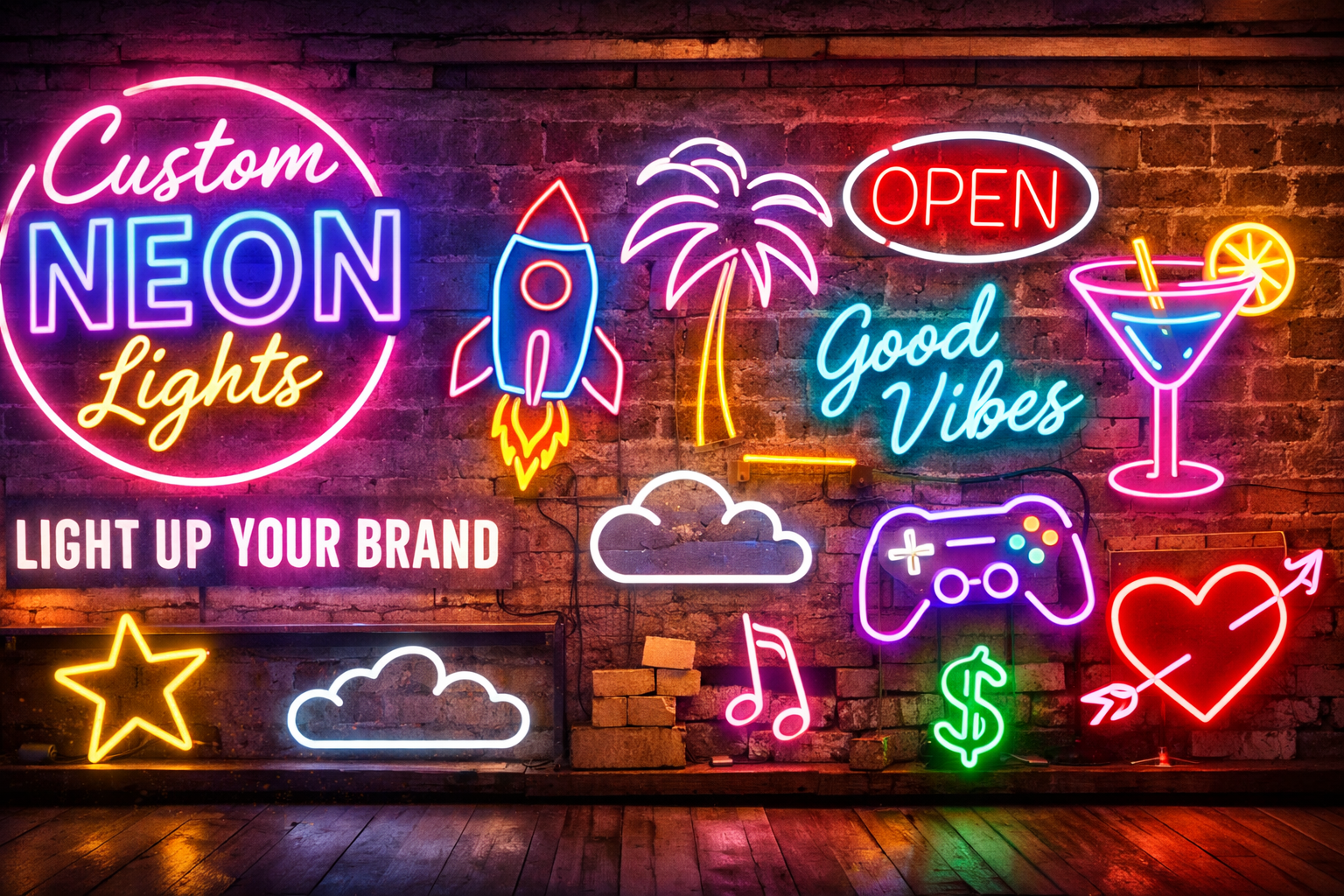
The way a space is lit can influence its appearance, atmosphere, and overall character. While ceiling lights and conventional lamps are essential for everyday visibility, decorative lighting can add another layer of personality to an interior. This is where Custom neon lights can offer an interesting design option.
Unlike standard decorative fixtures, personalised neon signs can be created around specific words, names, logos, symbols, or short messages. This makes them suitable for different environments, from private homes and workspaces to retail stores and commercial establishments.
Neon Lights can be used as a statement feature, a branding element, a decorative accent, or a visual backdrop. Their effectiveness, however, depends on choosing a suitable design and placing it thoughtfully within the space.
Whether you are updating a single room, designing a professional workspace, or refreshing a business interior, understanding how to use personalised lighting can help you create a more cohesive environment.
Why Personalised Lighting Works in Different Spaces
Every space has a different purpose. A bedroom should feel comfortable, an office should remain professional, and a retail or hospitality environment needs to create an impression that customers remember.
Personalised lighting can be adapted to these different requirements.
For example:
- A home can use a name, quote, or decorative symbol.
- An office can display a company name or brand message.
- A shop can highlight its identity or a specific display area.
- A café can create a distinctive feature wall.
- A studio can use a logo or creative phrase as a backdrop.
The same basic concept can therefore be adapted to very different interiors.
Custom Neon Lights for the Home
Home interiors provide considerable freedom when it comes to decorative lighting. There is no need to follow a particular commercial branding style, which allows homeowners to select designs based on personal taste.
Bedroom
A bedroom can benefit from subtle decorative lighting.
A personalised name, initials, short phrase, or simple symbol can be positioned above a headboard, beside a dressing area, or on an otherwise empty wall.
The design should complement the room rather than compete with furniture and other decorative elements.
Living Room
The living room is often the social centre of a home, making it an ideal location for a distinctive lighting feature.
A neon sign can be placed above a console, behind a sofa, or on a feature wall.
For a cleaner appearance, choose a design with enough space around it instead of covering the entire wall with multiple decorative elements.
Gaming and Entertainment Areas
Gaming rooms, media rooms, and entertainment spaces often allow more creative freedom.
A graphic, gaming-related symbol, personalised name, or short phrase can add character to the environment.
Here, Neon Lights can become part of the overall visual theme rather than functioning as a standalone decoration.
Home Office
A home office should balance personality with concentration.
A small sign featuring a company logo, personal brand, or motivational phrase can provide visual interest without taking up desk space.
It can also serve as a background feature during online meetings or video content.
Custom Neon Lights for Offices
Office interiors have different requirements from residential spaces. The lighting needs to look professional while supporting the identity of the organisation.
Reception Area
The reception is usually the first area visitors see.
A company logo or name displayed as personalised lighting can make the entrance more distinctive.
The sign should be large enough to remain readable from the expected viewing distance but should not overwhelm the reception desk or surrounding furniture.
Meeting Rooms
A simple logo or understated design can be used in meeting areas.
This approach works particularly well for businesses that want to reinforce their brand identity without making the office feel overly promotional.
Employee Lounges
Break rooms and employee relaxation areas can have a more informal appearance.
A short phrase or creative design can help create a less formal atmosphere and give the space a stronger identity.
Creative Workspaces
Design agencies, photography studios, marketing companies, salons, and other creative businesses can use personalised signs to reflect their working environment.
A well-designed sign can also become part of the company's visual culture.
Custom Neon Lights for Businesses
Businesses often need their physical environment to communicate an identity quickly.
A personalised sign can help achieve this by combining lighting with typography, colour, and brand recognition.
Retail Stores
Retail businesses can use neon signs around:
- Entrance areas
- Checkout counters
- Product displays
- Feature walls
- Fitting areas
- Promotional sections
A logo or short message can help draw attention to a particular part of the store.
The sign should be positioned where customers naturally look rather than being hidden behind shelves or displays.
Cafés and Restaurants
Hospitality businesses often rely heavily on atmosphere.
A carefully selected neon sign can complement the furniture, wall design, menu presentation, and overall theme.
A café might use its name or a short phrase, while a restaurant could create a feature wall that reflects its concept.
The objective should be to create an attractive environment rather than simply increasing brightness.
Salons and Studios
Beauty salons, hair studios, tattoo studios, photography spaces, and fitness studios can use personalised lighting to strengthen the visual character of their premises.
A short phrase, logo, or symbol can work particularly well behind a reception desk or in a customer waiting area.
Use Neon to Strengthen Brand Identity
Branding does not only exist online.
The physical environment can also reinforce how customers perceive a business.
A company logo recreated as Custom neon lights can become a consistent visual element across the premises.
When creating a branded sign, consider:
- Existing brand colours
- Logo proportions
- Typography
- Sign dimensions
- Wall colour
- Viewing distance
- Surrounding furniture
Keeping these elements consistent helps the lighting feel like part of the brand rather than a random decorative feature.
Create a Photo-Friendly Space
People naturally take photographs in visually interesting environments.
A personalised neon sign can therefore become a useful feature in a customer-facing location.
For example, businesses can create a dedicated photo wall containing their logo or a short brand-related phrase.
Events can also use personalised Neon Lights as a backdrop for photographs.
The design should be simple enough to remain readable in pictures and should be positioned at an appropriate height for people standing or sitting nearby.
Choose the Right Design
The design is arguably more important than the size of the sign.
A complicated design can become difficult to understand when illuminated.
Short phrases, simple lettering, and clean symbols are often easier to read.
Before finalising the design, consider:
- How quickly can someone understand it?
- Is the lettering clear?
- Does it suit the room?
- Does it match the intended audience?
- Will it remain attractive over time?
Avoid choosing a design simply because it looks impressive in a product photograph.
Selecting the Appropriate Size
The dimensions of the sign should correspond to the available space.
A small sign may disappear on a large feature wall, while an oversized sign can dominate a compact room.
Measure the intended installation area before ordering.
Also consider the surrounding furniture. A sign positioned above a sofa, desk, reception counter, or bed should have proportions that visually relate to the furniture underneath it.
Consider the Lighting Effect
The purpose of decorative neon is not necessarily to illuminate an entire room.
Instead, it can provide a focused visual effect.
Think about how the sign will appear:
- During daylight
- In the evening
- With other lights switched on
- With the surrounding lights dimmed
- In photographs and videos
This helps determine whether the chosen design and brightness are appropriate.
Installation Should Be Planned in Advance
A good sign can lose some of its visual appeal if installation is poorly planned.
Before mounting the sign, decide:
- Where it will be positioned
- How it will be supported
- Where the power connection is located
- How cables will be arranged
- Whether the wall can support the installation
- How the sign will be accessed for maintenance
A clean installation keeps attention focused on the design instead of exposed wires or unsuitable mounting hardware.
Think About Everyday Practicality
Decorative lighting should be convenient to operate.
If a sign is installed in a home, consider whether it can be switched on and off easily.
For businesses, the operating schedule may depend on opening hours.
If the sign will be used frequently, check the manufacturer's information about power requirements, operating conditions, and expected maintenance.
Modern LED-based neon products can also be designed for decorative applications with efficient operation, depending on the specific product.
Maintenance and Care
Regular cleaning helps maintain the appearance of a neon sign.
Dust the visible surface using a soft cloth and follow the manufacturer's care recommendations.
Avoid excessive moisture around electrical components.
Check the mounting points and visible cables occasionally, particularly in busy commercial environments.
If there is visible damage or an electrical issue, stop using the sign and arrange appropriate professional assistance.
Common Mistakes to Avoid
Several simple mistakes can affect the final result.
Choosing a Design That Is Too Complicated
A complicated sign may look impressive initially but can become difficult to read.
Ignoring Wall Space
Always measure the installation area before ordering.
Using Too Many Signs
Multiple neon signs can compete for attention. One well-positioned feature may be more effective.
Forgetting Cable Placement
Visible cables can make an otherwise polished installation look unfinished.
Selecting Based Only on Price
Construction quality, materials, warranty, installation, and support should also be considered.
Home, Office or Business: Which Approach Works Best?
The ideal use depends on the purpose of the space.
| Space | Suitable Neon Approach | Main Goal |
|---|---|---|
| Bedroom | Name, initials or simple phrase | Personal atmosphere |
| Living Room | Statement word or decorative design | Visual interest |
| Home Office | Logo or motivational phrase | Professional personality |
| Corporate Office | Brand name or logo | Brand identity |
| Retail Store | Logo or feature message | Customer attention |
| Café or Restaurant | Creative phrase or logo | Atmosphere |
| Studio | Symbol, logo or statement design | Distinctive environment |
| Event Space | Names, dates or themed designs | Memorable décor |
This makes personalised neon a flexible option rather than a product limited to one particular type of interior.
Final Thoughts
Custom neon lights can be used in many different ways, but their strongest quality is flexibility. A personalised design can reflect the character of a home, communicate a company's identity, or add atmosphere to a customer-facing environment.
At home, Neon Lights can personalise bedrooms, living rooms, entertainment areas, and home offices. In professional environments, they can strengthen branding in reception areas, meeting rooms, studios, and employee spaces. Businesses can also use them to create distinctive retail displays, café interiors, restaurant feature walls, and photo-friendly areas.
The best results come from treating neon as part of the overall interior rather than as an isolated decoration. Consider the design, size, wall space, brightness, installation, surrounding décor, and everyday use before making a decision.
With thoughtful planning, personalised neon can become a distinctive visual element that adds character to a space while remaining practical enough for regular use.
Comments